

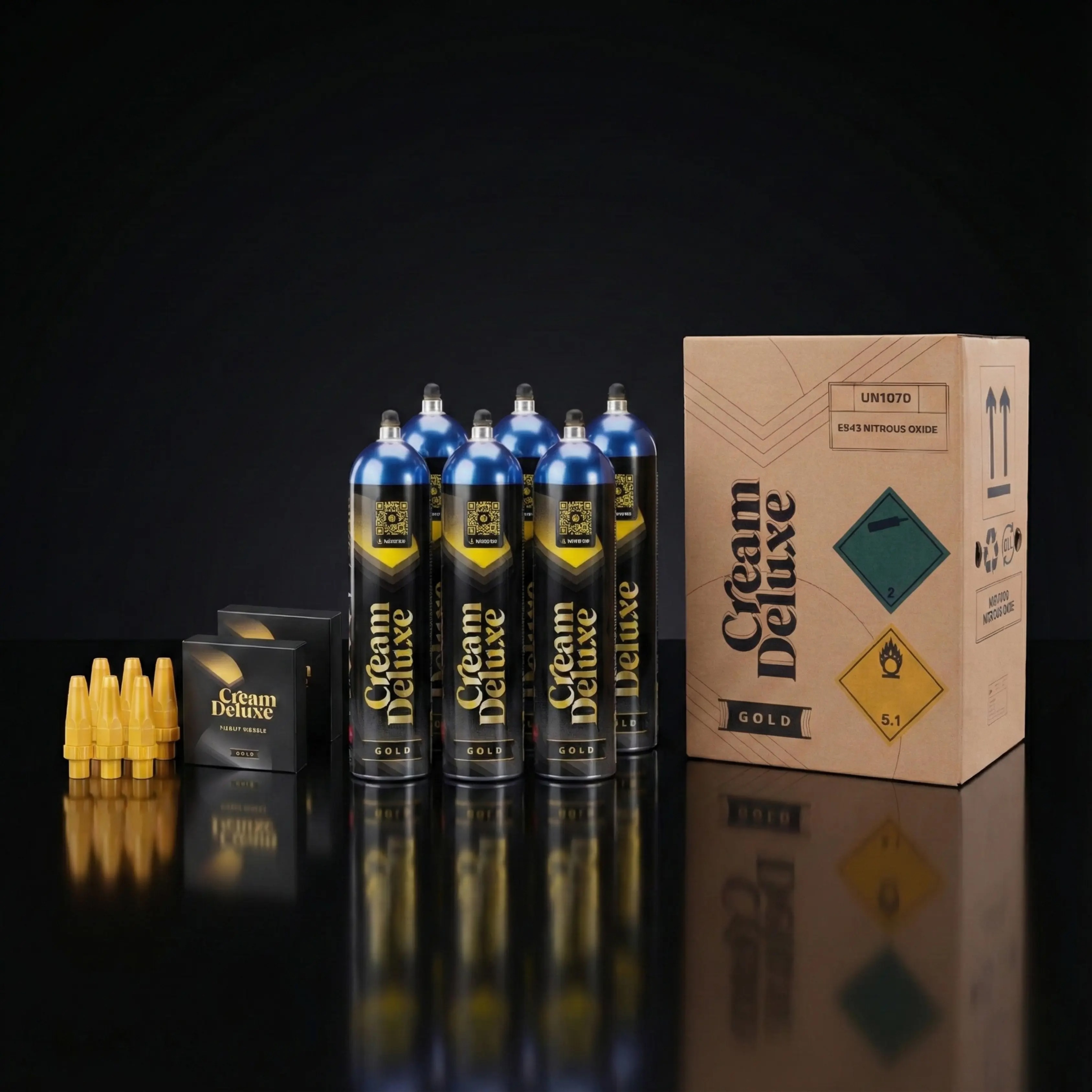
Buying cream chargers in bulk can make sense for distributors, cafes, restaurants, and hospitality suppliers—especially when quality, compliance, and supplier reliability are checked upfront. This guide is written for wholesale buyers comparing food-grade N₂O cream charger supply for EU and international distribution, with an emphasis on practical documentation and trade-ready logistics
Food-Grade N₂O Certification and Purity
One of the most important considerations is whether the gas inside the charger is certified food-grade nitrous oxide (N₂O). Food-grade N₂O is typically produced to defined purity specifications intended for culinary use, including whipped cream, foams, and beverage applications. Specific purity thresholds and documentation can vary by market and by supplier.
Wholesale buyers should look for clear “food-grade” labeling and ask for supporting documentation appropriate to their market, such as specifications, batch or lot details, and quality checks. This is particularly relevant when supplying professional kitchens, where food safety expectations are higher and documentation is often requested.
Compliance With EU and International Regulations
Bulk cream chargers generally need to comply with applicable pressure equipment, transportation, and product labeling requirements in the destination market. In the EU, compliance often involves CE-marked packaging or equipment and alignment with relevant transport and pressure equipment requirements, depending on the product format and distribution route.
Working with suppliers familiar with EU and international requirements can help lower the chance of shipment delays, rejected imports, or labeling issues as products move through the supply chain.
Manufacturing Quality and Cylinder Construction
Cream chargers may look similar, but manufacturing quality can differ between suppliers. Higher-quality chargers are typically manufactured with consistent materials, controlled filling processes, and uniform construction to support safe use when paired with compatible dispensers and handled correctly.
For wholesale buyers, consistent build quality can matter for end-user results and complaint rates. Variations in cylinder construction or fill consistency may lead to inconsistent performance, which can affect customer satisfaction over time.
Supplier Transparency and Traceability
Stronger suppliers tend to be more transparent about where and how their cream chargers are produced. This may include sharing information about manufacturing location, gas sourcing, quality control processes, and batch traceability.
Transparency makes it easier to respond to customer questions and demonstrates a more accountable approach to quality—an important consideration for buyers serving professional or regulated foodservice markets.
Packaging, Labeling, and Wholesale Presentation
Bulk orders should arrive with clear, compliant packaging that includes required safety warnings, usage guidance, and batch information. Proper labeling can make it easier for distributors and resellers to pass on accurate product and safety information without additional handling or repackaging.
For wholesale buyers, professional packaging also supports smoother storage, inventory management, and resale, particularly when supplying retail, hospitality, or distribution partners.
Logistics, Storage, and Shelf Considerations
Cream chargers are pressurized products, so logistics and storage conditions matter. Buyers should review how products are packed for transport, whether cartons are designed to protect cylinders during shipping, and what storage conditions are recommended by the supplier.
Many suppliers can provide guidance on storage conditions and stock rotation to support product integrity. For disposal and recycling, buyers should follow local rules for pressurized containers and confirm whether cartridges must be fully discharged before recycling.
Volume Options and Ordering Flexibility
Wholesale buyers often benefit from flexibility, whether ordering smaller trial quantities or scaling up for higher-volume distribution. It is worth confirming available pack sizes, pallet configurations, and the supplier’s ability to support recurring or growing orders.
Suppliers experienced in wholesale distribution are often better equipped to manage changing demand without compromising consistency or delivery timelines.
Supplier Experience in Wholesale and Foodservice Markets
Not all cream charger suppliers have the same level of experience with wholesale or professional foodservice buyers. Buyers may wish to prioritize partners familiar with distributor requirements, café and restaurant operations, and hospitality supply standards.
Suppliers positioned in the premium segment—such as Cream Deluxe Spain—typically emphasize food-grade standards, consistent production controls, and wholesale support that aligns with commercial foodservice expectations.
Conclusion
Ordering cream chargers in bulk involves more than comparing prices. Wholesale buyers benefit from reviewing food-grade certification, regulatory alignment, manufacturing quality, supplier transparency, and logistics support before committing to a supplier
By checking these fundamentals early, buyers and sellers can support a more reliable supply chain, reduce operational risk, and deliver consistent, compliant products to foodservice and retail customers across EU and international markets.
Respuestas